
Weight data is no longer just a flock management tool. For modern poultry operations, it represents performance, financial health, and competitive standing. Three distinct threats put this data at risk: external attacks, competitive espionage, and internal falsification. Each demands a targeted response.
The External Threat: Hacktivism and Ransomware
The poultry industry attracts strong ideological opposition. Neethirajan (2025) documents how hacktivist groups target livestock operations using denial-of-service attacks, unauthorised data disclosures, and system manipulation to publicise concerns about intensive production. These tactics can expose farm data, disrupt operations, and cause lasting reputational damage.
Agricultural cybersecurity threats extend well beyond activism. In 2021, a ransomware attack on the world’s largest meatpacker shut down processing facilities across multiple countries and forced an $11 million ransom payment (Neethirajan, 2025). Agriculture remains underprepared for such threats, with digital security maturity lagging behind most other industries (Hazrati et al., 2022).
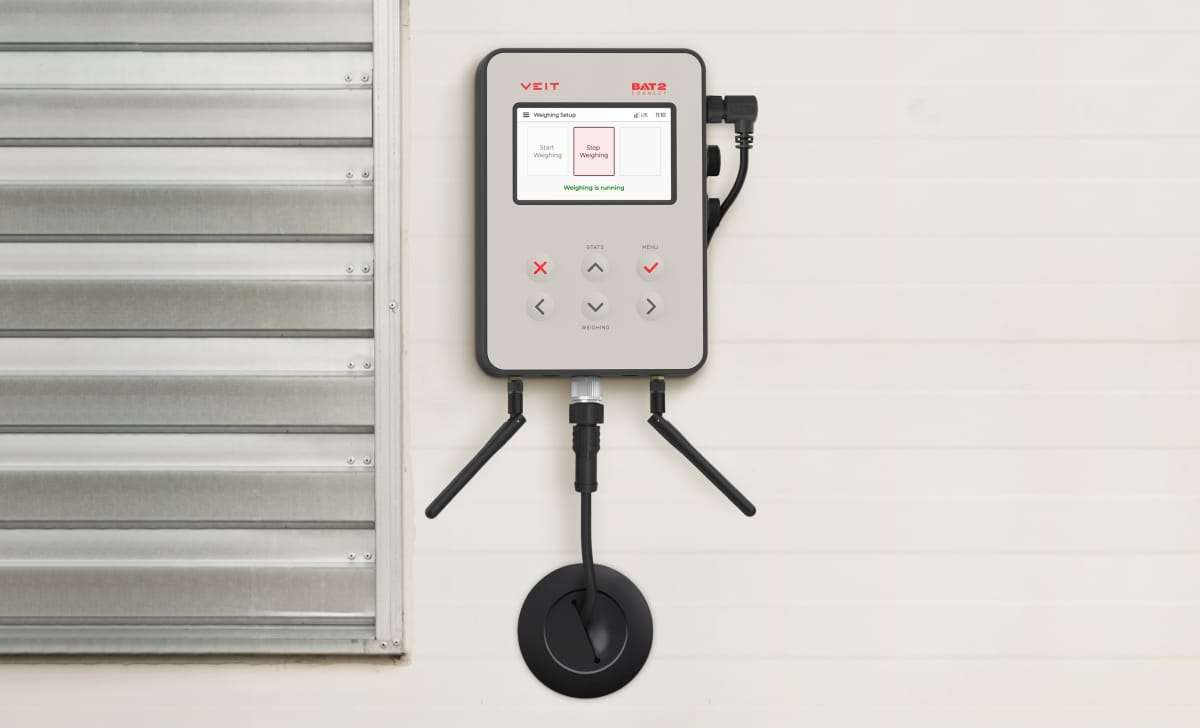
The BAT2 Connect automatic scale is built to operate in this environment. Its proprietary operating system, BAT OS, is specifically designed to prevent unauthorized remote access and tampering. Encrypted, multi-tier backups hosted in BAT Cloud keep weight records safe and recoverable after any disruption.
Protecting Agricultural Data from Competitive Espionage
Livestock data privacy is a competitive concern as much as a security one. Continuous weight records reveal growth rates, feed conversion, flock health trends, and harvest scheduling. In the wrong hands, this data becomes actionable intelligence about a competitor’s operational strengths and vulnerabilities.
Kaur et al. (2022) identify production metrics, operational schedules, and proprietary business data as among the most sensitive information a farm generates. Unauthorised access can erode competitive advantage and create regulatory exposure. Protecting agricultural data from third-party access is now as strategically important as protecting it from external attackers.
BAT Cloud’s customisable access rights ensure each user sees only the data relevant to their role. Encrypted automated flock data does not leave the system without explicit authorisation.
The Internal Threat: Preventing Data Falsification
External attacks attract the most attention, but internal manipulation is an equally real risk. Workers conducting manual weighing sessions may record estimates rather than true weights in order to finish faster. This corrupts data silently and is difficult to detect after the fact.
Farm data security must extend to the point of entry. The BAT1 manual poultry scale prevents falsification by automatically saving each weight entry to internal memory the moment a bird is weighed. There is no opportunity to modify or skip entries afterward. A timestamp is added to every record, creating an auditable trail linked directly to the session.
On secure farm management systems like the BAT2 Connect, automated collection removes this risk entirely. The scale operates continuously without an operator, logging individual bird weights and storing raw data for the last four flocks in onboard memory. No manual intervention is possible at the point of collection.
Reliable Data Starts With a Secure Foundation
Accurate weight data is only valuable if it can be trusted. That trust depends on protection from external threats, control over who accesses operational intelligence, and prevention of internal falsification.
Tamper-proof weight recording from the BAT1 and the encrypted data infrastructure of the BAT2 Connect form a layered approach to secure IoT farming, one that matches the complexity of the threats modern poultry producers navigate every day.
References
1.) Hazrati, M., Dara, R., and Kaur, J. (2022). On-farm data security: practical recommendations for securing farm data. Frontiers in Sustainable Food Systems, 6, 884187. https://doi.org/10.3389/fsufs.2022.884187
2.) Kaur, J., Fard, S.M.H., Amiri-Zarandi, M., and Dara, R. (2022). Protecting farmers‘ data privacy and confidentiality: recommendations and considerations. Frontiers in Sustainable Food Systems, 6, 903230. https://doi.org/10.3389/fsufs.2022.903230
3.) Neethirajan, S. (2025). Safeguarding digital livestock farming: a comprehensive cybersecurity roadmap for dairy and poultry industries. Frontiers in Big Data, 8, 1556157. https://doi.org/10.3389/fdata.2025.1556157